Hair Loss: Tests, Signs, Diagnosis, Causes & Dermatologist-Recommended Treatments
Hair loss is a widespread concern that manifests as sudden or gradual, excessive hair shedding, hair thinning, receding hairline, or noticeable bald spots/patches. Understanding what causes hair fall in men and hair fall in women, and how different types of hair loss can be identified, is crucial to figuring out the best course of action. An experienced dermatologist in Delhi, at Delhi Wellness Clinic, can help you grow back healthy, thick hair with tailored treatments.
The best treatment plan is created as per the identified clinical signs of hair loss and reports of some conducted diagnostic tests for hair loss. Here we share everything about hair loss- its potential causes, types, diagnosis, and best treatments.
Early recognition of hair loss symptoms and a confirmation of the specific type of hair loss can help prevent the progression of hair loss and ensure healthy hair regrowth with suitable dermatologist-recommended therapy.
Clinical Signs of Hair Loss
- Gradual hair thinning
- Widening of hair parting
- Hairline recession (in men)
- Visible scalp through hair
- Reduced the thickness of the ponytail
- Itchy or flaky scalp (in some cases)
- Bald spots or patches
- Excessive hair shedding at the time of combing
- Daily shedding of more than 150 hair strands
- Extensive hair fall, noticeable on the pillowcase and in the shower drains
- Weak or brittle hair (due to nutritional deficiency or aggressive hair treatments)
- Sudden hair loosening and shedding (due to physical or emotional shock).
Major Causes of Hair Loss/ Different Types of Hair Loss
Hair loss can be temporary for some while permanent for others, depending on its specific cause and severity.
The most common hair fall reasons include:
- Androgenetic Alopecia- It is the pattern baldness resulting from a combination of genetic and hormonal factors. For women, it is characterised by diffuse hair thinning, while for men, it is characterised by a receding hairline and crown thinning.
- Alopecia Areata- It is an autoimmune condition that causes coin-shaped bald patches. Mostly, it is induced by excessive stress in people who have a family history of it.
- Telogen Effluvium- It is an often reversible, sudden shedding of hair due to stress, crash diets, certain illnesses, or hormonal imbalances associated with thyroid disorder, postpartum changes, or PCOS.
- Nutritional Deficiencies- Low levels of iron, vitamin B12, vitamin D, zinc, and protein in the diet can result in extensive hair fall.
- Scalp Conditions- Dandruff, Seborrheic Dermatitis, and Scalp Psoriasis all can make hair follicles weak and cause hair to fall in large numbers.
- Poor Lifestyle and Care Routine- A highly stressed individual, unhealthy diet, smoking, chemical-based treatments, and extensive hair styling all can lead to hair loss.
Diagnosis of Hair Loss
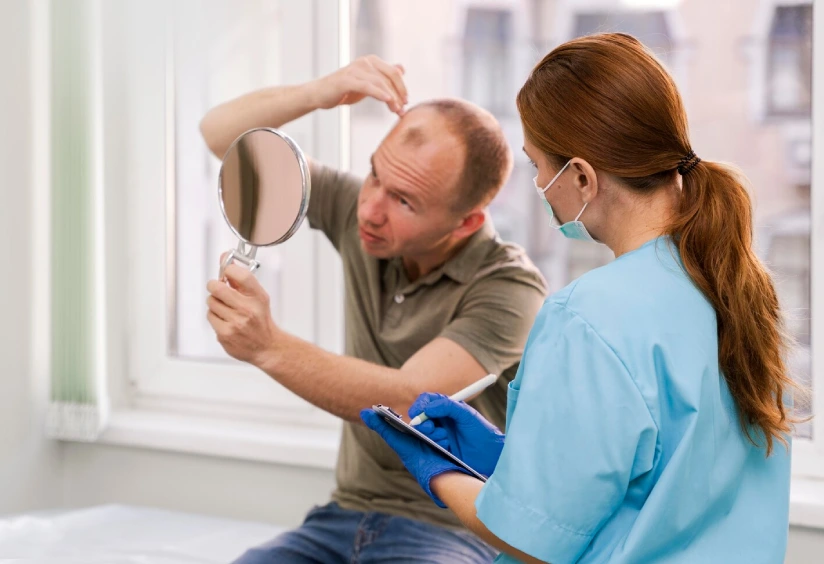
The underlying cause and severity of hair loss can only be accurately diagnosed by a dermatologist who uses a holistic approach. A dermatologist diagnoses hair loss by conducting a thorough evaluation, which includes the following:
- Scalp examination for hair loss, including checking on the health of hair roots health
- Review of medical records and learning of family history
- Assessment of stress and routine
- Dietitian review of existing diet plan
- Hormonal/Menstrual analysis (in women with hair loss signs)
- Diagnostic tests- including routine blood tests (thyroid test, CBC, iron studies, Vitamin D and Vitamin B12 test, and hormonal profile- DHEA-S, tes-tosterone, and prolactin for women with hair loss); pull test to evaluate extensive hair shedding; trichoscopy diagnosis to check for follicle density, inflammation, miniaturisations, and patterns; hair count/density analysis to track for over-time progress of hair loss; and scalp biopsy to confirm for scarring or non-scarring alopecia
Dermatologist-Recommended Treatments for Hair Loss
Based on the cause, type, and extent of hair loss, a doctor will recommend the most suitable hair loss treatment in Delhi, either as a single treatment or a combination of these approaches:
- Hair Growth Stimulating Medications- Hair loss expert may prescribe a specific strength of topical minoxi-dil to boost blood flow to the roots and extend the hair growth phase; oral finasteride to men to reduce the DH-T level and treat pattern baldness; or spi-ronolactone to women for reducing their hormonal hair thinning.
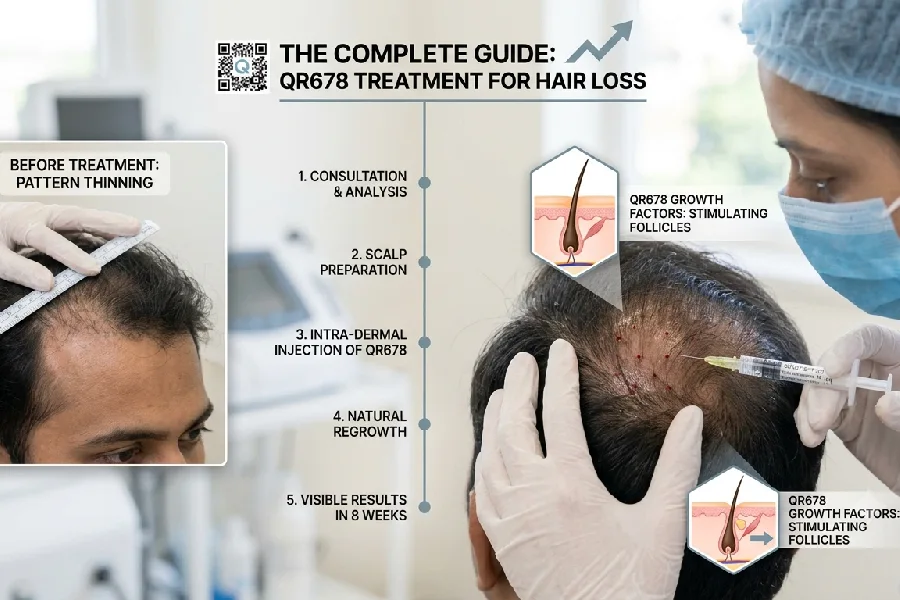
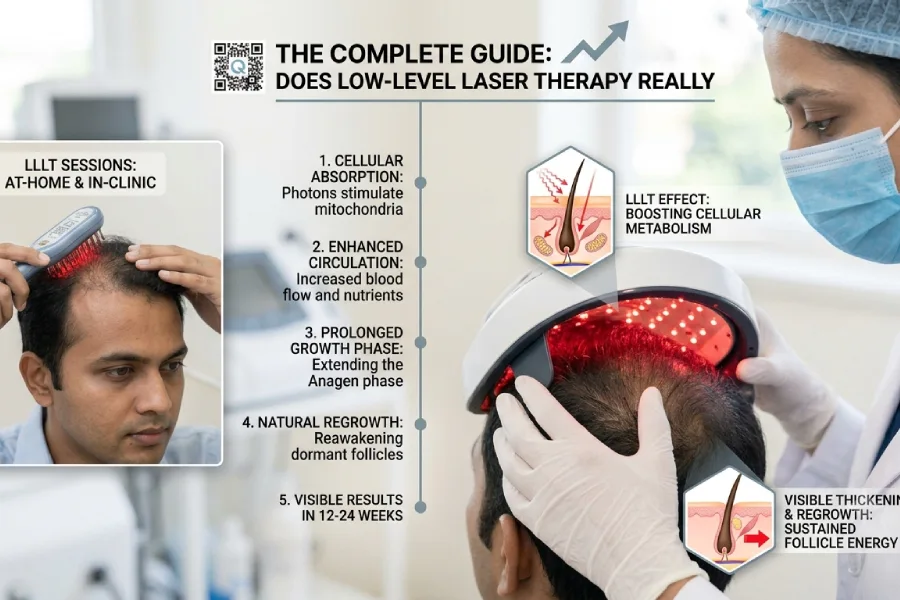
- Clinical Therapies- There are a variety of hair regrowth-promoting or hair shedding reduction therapies available, such as GFC (Growth Factor Concentrate) hair therapy, PR-P (Plate-let Rich Pla-sma) hair therapy, hair mesotherapy, scalp microneedling, and low-level laser therapy.
- Nutritional Support- Dermatologists advise taking supplements for iron, biotin, zinc, omega-3, Vitamin D, or Vitamin B12, whichever hair growth-associated nutrient is deficient.
- Management of Scalp Condition- For scalp issues that cause hair shedding, dermatologists recommend anti-fungal products or anti-inflammatory products.
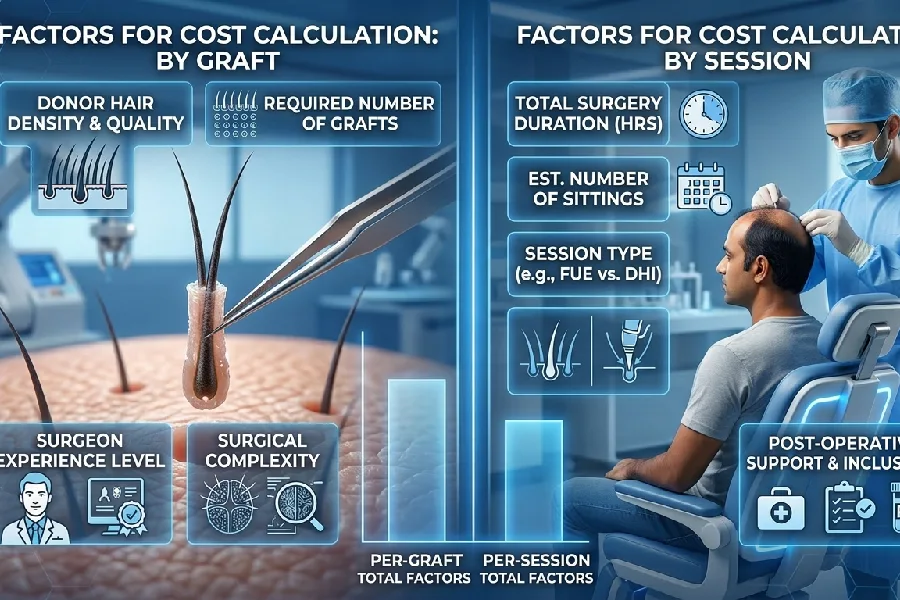
- Hair Transplant- In case of severe baldness like advanced, stable pattern baldness, a dermatologist recommends natural, permanent hair restoration with FUT, FUE, or DHI technique.
Besides, dermatologists recommend self-care for the scalp and hair to avoid further hair loss or put an end to it.
FAQs on Hair Loss Treatment
Why does my hair fall out so easily?
Hair fall can be a concern due to a variety of reasons, including illnesses like anaemia and thyroid; excessive stress, genetics, nutrition, Vitamin D deficiency, hormonal changes, and poor scalp and hair care.
Can I confirm the root cause of my hair loss?
Yes, with a structured approach of a dermatologist that includes physical exam, medical history review, and certain diagnostic, in-office/laboratory tests.
How do I know which type of hair loss I have?
With self-observation of key signs of hair loss like hairline recession, patchy hair loss, or widening part, knowledge of potential causes, and definitive diagnosis by a dermatologist, it is possible to learn about the type of hair loss.
How many strands of hair are normal to shed daily?
Anywhere between 50-150 strands is normal to daily shed if the hair follicles continue to follow the normal hair growth cycle. But if hair is getting thinner and hair shedding exceeds, accompanied by itching or redness, then it is recommended to consult a hair doctor.
How can I get back my lost hair?
Natural hair regrowth is possible with different treatments, including medications like topical min-oxidil and oral fin-asteride; regenerative therapies like low-level laser therapy or scalp microneedling; corticosteroid injections (in case of patchy hair loss), some natural remedies, diet and lifestyle changes, and hair transplant (for androgenetic alopecia).
Take Help From a Top-Rated Hair Loss Expert
Are you experiencing persistent hair fall for over 3 months, have been spotted with sudden bald patches, have an itchy, scaly, or red scalp, have a family history of baldness, or have been low in confidence due to hair thinning?
Don’t ignore these signs; see a certified dermatologist and hair loss doctor in Delhi, at Delhi Wellness Clinics for a tailored, pocket-friendly hair loss solution.


 +91 9266212367